Zotero
Your personal research assistant for collecting, organizing, citing, and sharing research.
Executive Summary
Zotero is a free and open-source reference management software designed to help researchers, academics, and students efficiently collect, organize, annotate, and cite research materials. It integrates with web browsers and word processors, enabling seamless citation generation and bibliography creation in thousands of styles. The platform's key value lies in simplifying the often time-consuming and error-prone task of managing scholarly references, ensuring accuracy and promoting data ownership through its non-profit development model.
Use Cases
- Collecting and organizing research papers, books, and web sources for academic projects.
- Generating accurate in-text citations and bibliographies for theses, dissertations, and journal articles.
- Collaborating on research projects by sharing group libraries and resources.
- Annotating and reviewing PDFs and other research documents directly within the application.
- Maintaining a personal, searchable database of all research materials across multiple devices.
- Switching between thousands of citation styles for different publication requirements.
Features
Visibility
- Advanced Search and Filtering: Users can perform detailed searches across their entire library and create saved searches that automatically update with relevant materials.
- Tagging and Collections: Organize research items using customizable tags and hierarchical collections, allowing for flexible categorization and retrieval.
- Integrated PDF Reader and Annotation: Built-in PDF, ePUB, and HTML readers allow for highlighting, annotating, and extracting quotations and comments directly into notes.
Intelligence
- Automatic Metadata Capture: Automatically saves high-quality bibliographic data from websites, journal articles, and databases with a single click using the Zotero Connector.
- Identifier-Based Item Creation: Quickly add items to the library by entering identifiers such as DOI, ISBN, or PMID, which Zotero uses to retrieve full metadata.
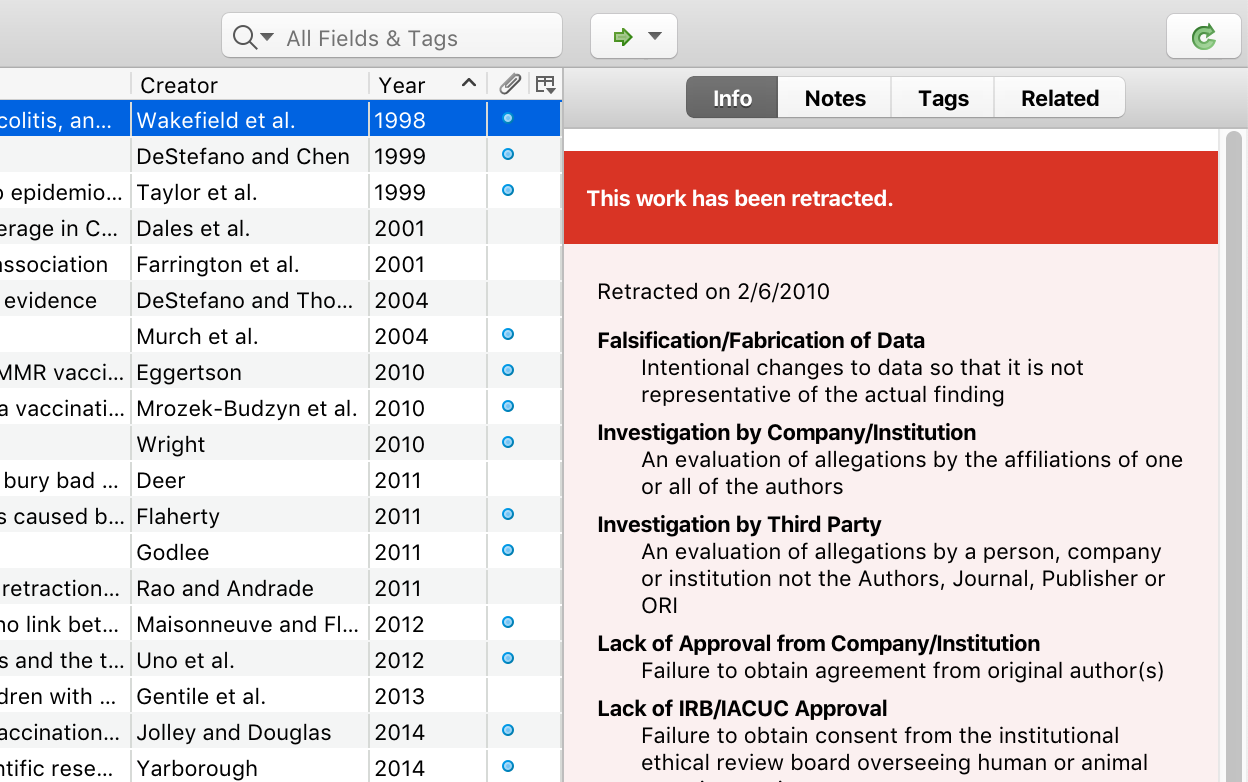
- Retraction Notifications: Zotero can warn users if they attempt to cite a paper that has been retracted, helping maintain academic integrity.
- Proxy Redirection: Automatically redirects users through their institution's proxy when accessing paywalled content, facilitating access to subscribed resources.
Support
- Community Forums with Developer Involvement: Support is primarily provided through active online forums where users can get help from a dedicated community and directly from Zotero developers.
- Extensive Documentation and Knowledge Base: Comprehensive online documentation, instructional screencasts, and a knowledge base are available to guide users.
- Open-Source Community Contributions: A vibrant open-source community contributes to bug fixes, new features, and the development of citation styles and translator codes.
Technical Specifications
- Architecture
- Desktop application with optional cloud synchronization, open-source, cross-platform (Windows, macOS, Linux, iOS, Android).
- Deployment
- Hybrid (Desktop application with optional Cloud/SaaS sync for data and files).
- Authentication
- Zotero account for sync services; API keys and OAuth 1.0a for third-party integrations.
- API Available
- Yes
- MCP Server
- No
Infrastructure
- AWS
AI/ML Stack
- Machine Learning
Integrations
- Microsoft Word
- LibreOffice
- Google Docs
- Browser Extensions
- Cloud Sync
Security & Compliance
Encryption: AES-256 at rest (for newly created accounts), TLS 1.3 in transit (A+ SSL Labs score).
Pricing
- Model
- Freemium (Free software with paid cloud storage tiers)
- Starting Price
- Free for 300 MB storage; $20/year for 2 GB; $60/year for 6 GB; $120/year for unlimited storage.
- Target Customer
- Individuals (students, academics, researchers), Research Groups, Institutions
- Contract Type
- Annual (for paid storage)
- Free Trial
- No (credit card required)
About Zotero
Zotero is a free and open-source reference management software that helps researchers collect, organize, cite, and share research materials. It was initially launched in 2006 by the Roy Rosenzweig Center for History and New Media at George Mason University. Since 2009, Zotero's development and operations have been managed by the Corporation for Digital Scholarship, a non-profit organization dedicated to open-source infrastructure for digital humanities.
Alternatives to Zotero
- Zotero Connector by Zotero — Effortlessly save research references directly from your browser.
- Zotero for iOS/Android by Zotero — Manage, read, and annotate research libraries on your iOS/Android device.
- ZoteroBib by Zotero — Quickly create bibliographies online without installing Zotero.
- ChatPDF API by ChatPDF — Integrate AI-powered PDF interaction and summarization into your applications.
- Covidence by Covidence — The world's leading software for managing and streamlining your systematic review.
- EndNote by Clarivate — Organize your research, create bibliographies, and write with ease.
- Inciteful by Inciteful — Explore academic literature and discover connections using citation networks.
- Logically Citation Generator by Afforai (now Logically.app) — Your AI research assistant for instant citations, summarization, and fact-checking with credible sources.